 Tromsø Northern Lights Trips
What to Wear for the Northern Lights in Tromsø

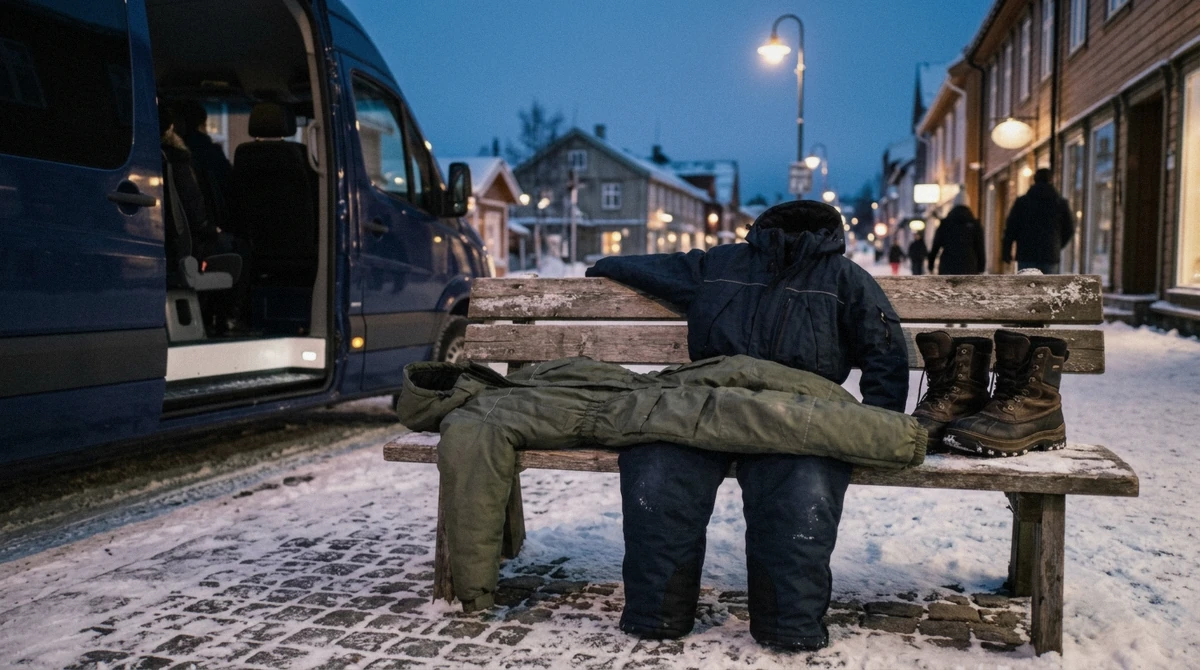
Guests ask us what to wear for the northern lights in Tromsø before almost every chase, usually while staring at a forecast of minus 6 degrees Celsius and wondering how much gear to buy. The relief most visitors do not expect: every chase on this site lends you an insulated thermal suit, so your own packing list is shorter than it looks on paper. What is left on you is the layer system underneath that suit, the right boots and gloves, and a few honest comfort questions nobody puts in a packing list, like whether there is a toilet on board. Standing outside for an hour at minus 6°C, sometimes colder once you cross into Finland, is a different experience from a quick walk to dinner, and this guide covers exactly what closes that gap.
Quick answer
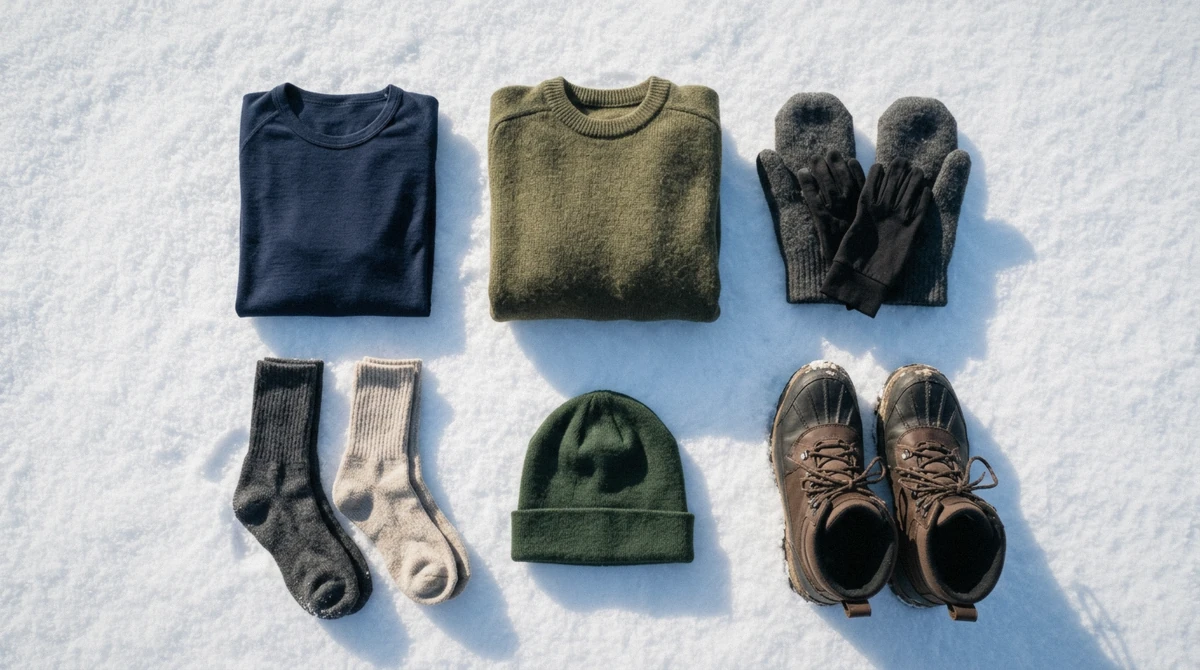
All six tours lend an insulated thermal suit that goes over your own clothes, so bring wool or synthetic base layers, two pairs of socks, a hat, and liner gloves under mitts, and you are covered from September through April. The one thing to check before you book is what each northern lights operator lends, since only two of the six vehicles carry a toilet.
Key takeaways
- Every operator lends a thermal suit that goes over your own clothes, not instead of them, the biggest packing relief on this list
- What's on you: wool or synthetic base layers, never cotton, plus two pairs of socks, a hat, and liner gloves under mitts
- Don't wear cotton next to skin, it stays wet and cold once you start sweating in the suit
- Night lows run to -6°C in January and February, with cold snaps reaching -15°C, and inland stops run 10 to 15 degrees colder again
- Winter boots come with most tickets; trainers are not adequate footwear for a chase
- Only Northern lights safari and aurora chase carry a toilet on board, worth knowing before a 5 to 8 hour night
How Cold It Really Gets
Tromsø sits at 69.6°N but the Gulf Stream keeps it mild for the latitude, so you are rarely dealing with the deep cold people associate with the Arctic Circle. Average night lows by month, from Norwegian Meteorological Institute normals, still call for a real winter layer system.
| Month | Average night low | What that means to wear |
|---|---|---|
| November | -3°C | Full layer system under the lent thermal suit, liner gloves plus mitts |
| December | -5°C | Same system, add a second pair of socks if you run cold |
| January | -6°C | Coldest average month, hand warmers earn their place here |
| February | -6°C | Same as January, plus watch for -15°C cold snaps on clear, still nights |
| March | -4°C | Slightly milder, same system still worth wearing in full |
Cold snaps can reach -15°C even in a mild winter, and if your chase crosses into Skibotn or across the Finnish border chasing clear sky, expect the temperature to drop a further 10 to 15 degrees below whatever Tromsø itself is reading that night. That gap catches people off guard more than the headline number does.
September and October sit at the milder end of the season, with average night lows of 5°C and 1°C, which is closer to a brisk autumn evening than a true winter night. That gap matters when you are packing, since a full expedition-grade layer system is overkill in early autumn and genuinely necessary once December arrives. We would rather tell you honestly which months need which effort than have everyone over-pack for the whole season out of caution.
The Layer System That Works
The formula that actually works under a lent thermal suit, worked through from the skin out.
- Wool or synthetic base layer, top and bottom, never cotton, cotton stays wet and cold once you sweat
- Fleece or wool mid-layer for extra insulation on the coldest nights
- Two pairs of socks, wool on the outside pair, to handle standing still for an hour
- A hat that fully covers your ears, most heat loss happens through an uncovered head
- A buff or neck gaiter to pull up over your face when the wind picks up
- Thin liner gloves worn under mitts, so you can pull the mitts off for a phone photo without bare hands in -6°C
- Winter boots, most tickets include them, trainers alone are not adequate
- Hand warmers tucked into gloves or boots, sold in any Kiwi or Rema 1000 supermarket in town
The logic behind this system is simple: the thermal suit handles wind and outer insulation, so your job underneath is managing moisture and covering the parts of your body that lose heat fastest, hands, feet, ears and neck. Skip any single piece of it and you feel the gap within the first hour standing still, which is most of what a chase actually involves once you have reached a dark spot.
What the Operators Lend and What You Bring
This is what each northern lights operator lends against what stays on your own packing list, tour by tour.
| Item | Usually Provided | Bring Your Own | Notes |
|---|---|---|---|
| Thermal suit | Yes, all six | No | Rental on the Northern lights safari and the aurora chase, included free on the other four |
| Winter boots | Yes, most tickets | Only if yours are already warm and waterproof | Trainers alone are not adequate under the suit |
| Base layers | No | Yes | Wool or synthetic only, never cotton |
| Gloves or mitts | Rarely | Yes | Bring liner gloves under mitts for phone use outside |
| Hat | No | Yes | Full ear coverage matters more than warmth of fabric |
| Hot food | No, on any tour | Bring your own if you need more than a snack | Nobody serves dinner; eat before departure |
| Hot drinks and snacks | Yes, all six in some form | No | Spirit in the Sky grills sausages and marshmallows plus coffee and cocoa; Snow Travels serves hot dogs and hot chocolate |
| Tripod for photos | Only Northern lights chase | Bring your own on the other five | Snow Travels lends tripods on its chase |
| Toilet on board | Only Northern lights safari and aurora chase | Plan ahead on the other four | Arctic Breeze and Snow Travels tell guests in writing to go before departure |
| Passport | No | Yes, if crossing into Finland | Spirit in the Sky notes this in its own listing for cross-border chases |
Comfort on a Six-Hour Night: Toilets, Food, Boredom
This is the section most guides skip, and it is the part that actually affects how you remember the night. A chase runs 5 to 8 hours, often longer once you add driving time to clear sky, and you are back at your hotel around 3 a.m. more often than the listing's headline duration suggests.
- Toilets: only the Northern lights safari and the aurora chase have a toilet on the bus. On the other four, Arctic Breeze's own listing says plainly, "Before you go. Use the restroom. It might not be available at remote locations," and Snow Travels tells guests the same in writing: "Please use the restroom before departure, as facilities may not be available in remote locations." On a cross-border chase, the next facility can be a fuel station up to an hour away.
- Food: nobody serves dinner. Northern Lights Safari's own listing tells guests to eat a proper meal before the safari starts. What you do get varies by operator: Spirit in the Sky grills sausages and roasts marshmallows with coffee, tea, hot chocolate and cookies; Northern Horizon's premium option serves reindeer sausages; Snow Travels does hot dogs and hot chocolate; NLT serves hot drinks and biscuits. Treat all of it as a snack, not a meal.
- The 3 a.m. return: guest reviews are consistent on this. Alison, from the United Kingdom, wrote after a Spirit in the Sky chase in April 2026, "It is a long night so make sure to wrap up warmly, I was glad I brought an eye mask so could sleep on the bus as you may not be back until 3am." Miriam, from Spain, said much the same after an NLT chase in March 2026: "driving us for hours in search of clear skies, we didn't get back until 3am."
- Boredom on a long drive: chasing clear sky means real driving time between stops, sometimes with long stretches where nothing is visible yet. An eye mask, a podcast downloaded in advance, or simply accepting the drive as part of the experience all help more than expecting constant action.
None of this is a reason to skip a chase, it is simply what a real night out looks like once you are chasing clear sky rather than standing in a fixed spot. Knowing the toilet situation and the food situation before you climb into the vehicle turns a possible frustration into a manageable, expected part of the evening, which is the whole point of writing it down plainly instead of glossing over it in a listing.
What to Pack, by Month and Traveller
If travelling in September or October
a lighter base layer and one mid-layer under the lent suit is usually enough, night lows sit between 1°C and 5°C
If travelling in January or February, the coldest stretch
pack the full layer system plus hand warmers, average lows hit -6°C with real cold-snap risk down to -15°C
If you run cold easily or have circulation issues
prioritise the toilet-equipped tours, the Northern lights safari or the aurora chase, since a longer stop for warmth is easier to manage on board
If you are booking with young children
pack an extra base layer and a spare hat, kids lose heat faster and the suits fit less precisely on smaller frames
If your chase might cross into Finland
carry a passport and pack for 10 to 15 degrees colder than the Tromsø forecast shows
Mistakes That End a Night Early
The failures we see most often are the same handful, over and over. Cotton base layers top the list, since a cotton t-shirt under the thermal suit traps sweat and turns cold within the first hour outside. Skipping ear coverage is next, a beanie that leaves ears exposed loses more warmth than people expect at -6°C. Trainers instead of proper boots is a close third, since a thin sole against packed snow for an hour numbs feet faster than the cold air itself does.
The other failure is planning-related rather than clothing-related: skipping the toilet before departure on a tour without one on board, or arriving without eating because you assumed the tour would feed you dinner. Both are easy to avoid once you know to expect them, which is exactly why we put them here.
Pack for the layer system, not for the cold snap headline, and the lent thermal suit will do more of the work than you expect. For the photography side of the same cold night, our how to photograph the northern lights guide covers keeping batteries alive and holding a phone steady in gloves, and if you would rather chase without a tour at all, without a tour covers what that actually involves.
Packing for one night is different from packing for four, and the number of evenings you should hold free is covered in how many nights to stay.
Frequently Asked Questions
Are jeans acceptable in Norway for a northern lights tour?
No. Jeans do not dry once damp and restrict movement inside a bulky thermal suit. Wear wool or synthetic base layers instead, jeans are the most common regret we hear about the next morning.
Can I wear shorts on a northern lights chase?
No, not under the thermal suit in aurora season. Night lows run from -3°C in November to -6°C in January and February, shorts have no place in that layer system regardless of how warm the suit itself feels.
How cold does it actually get on a winter night in Tromsø?
Average night lows run -3°C in November, -5°C in December, and -6°C in January and February, with occasional cold snaps down to -15°C. Inland stops toward Skibotn or across the Finnish border run 10 to 15 degrees colder again.
Do the tours lend clothing?
Yes, all six operators on this site lend an insulated thermal suit that goes over your own clothes. Most tickets also include winter boots, so what is left on your own list is base layers, socks, a hat and gloves.
Is there a toilet on a northern lights tour?
Only on the Northern lights safari and the aurora chase. The other four tell guests in writing to use the restroom before departure, since facilities may not be available once you are out chasing clear sky.
What should I bring in my pockets?
Hand warmers, a spare pair of liner gloves, and your phone in an inside pocket where cold will not drain the battery as fast. Keep any spare camera batteries close to your body for the same reason.
What do I need in September and October versus January?
September and October run mild by comparison, night lows of 5°C and 1°C, so a lighter base layer and one mid-layer under the lent suit is usually enough. January demands the full system plus hand warmers, with lows averaging -6°C.