 Tromsø Northern Lights Trips
How Many Nights You Need in Tromsø to See the Northern Lights

Three to four nights is the honest answer to how many days in Tromsø to see the northern lights, if you want a real shot rather than a coin flip. Guides found clear sky on 93 percent of tours across a tracked season, and the wider dataset of 1,346 chases saw the aurora on 89.4 percent of them, but those numbers come from repeat attempts, not a single night. One night is a genuine gamble on the weather; two nights on separate evenings is where the odds start working in your favour. Here is the reasoning behind that, a four-night plan that uses the extra days well, and who can reasonably get away with less.
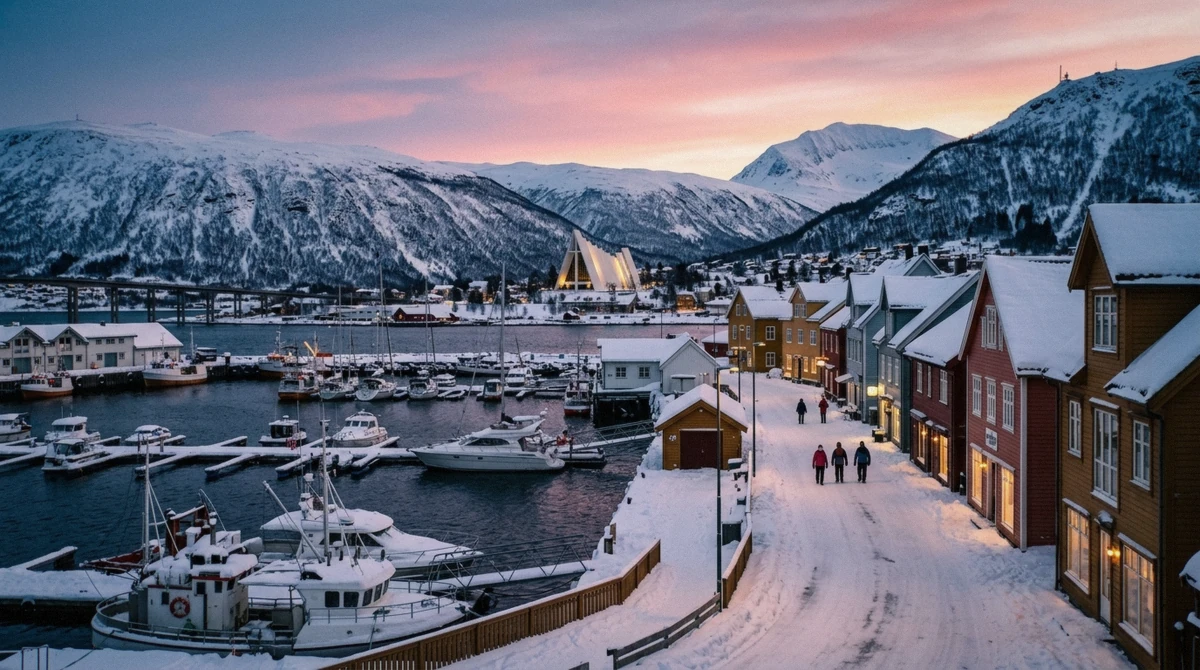
Quick answer
Plan for three to four nights in Tromsø, with two aurora chases booked on separate evenings rather than one long tour. Guides find clear sky on 93 percent of tours, and the season-wide sighting rate sits at 89.4 percent, but those numbers describe repeat chances, not a single night's odds.
Key takeaways
- One night is close to a coin flip on the weather; book two separate evenings if you can
- Guides found clear sky on 93% of tours across a tracked season, and the season-wide sighting rate was 89.4% of 1,346 chases
- Free cancellation up to 24 hours before departure means you can hold two dates and drop whichever you don't need
- See the six chases we compare on this site before you pick which nights to book
- Between chases, whale season runs November to January and the Fjellheisen cable car climbs to NOK 495 return
- Not sure which month to land in first? See our best time to see the northern lights guide
What the Odds Look Like by Number of Nights
No row here gives you a fabricated per-night percentage. Aurora forecasting doesn't work that precisely, and any site that quotes you an exact number per night is guessing. What we can give you is the honest shape of the risk as nights add up.
| Nights | What you'd book | The honest read |
|---|---|---|
| 1 | One chase, no backup | Essentially a coin flip on that specific evening's weather; a stuck front can beat even a strong-odds season |
| 2 | Two chases, ideally different operators | The safer bet: a second, separate evening meaningfully improves your real chances without any guaranteed number |
| 3 | Two chases plus a spare evening | A full free day to reschedule if the first two nights cloud out, inside the standard 24-hour cancellation window |
| 4 | Two chases, a spare evening, and daytime activities | Our recommended minimum for a trip that isn't purely weather-dependent |
| 5+ | Multiple chases and real flexibility | The safest plan if your dates are fixed and non-negotiable, since a stuck front can span several days running |
The season-wide numbers, 89.4 percent of 1,346 tracked chases and clear sky on 93 percent of tours, describe an aggregate across 81 observing nights and eight operators, not a guarantee for any single evening you book. The honest way to read that: over enough evenings, the odds are genuinely good, but the share of tours that saw nothing proves any one night can still miss.
The practical takeaway isn't a formula, since we don't have the underlying data to calculate a real per-night probability and won't pretend otherwise. It's simpler than that: every additional independent evening you have available is another chance for the weather to break your way, and the honest floor is that a single night carries real risk of coming up empty even in a strong season. Two nights turn that risk into a genuine backup plan rather than a single roll of the dice.
Why Cloud, Not the Sun, Sets the Number
Solar activity is rarely the limiting factor here. Tromsø sits at 69.6°N, directly under the auroral oval, so even a modest Kp 2 puts a green arc on the northern horizon on most clear nights through the season. Nights with Kp 3 or higher, which bring visible curtains rather than a faint arc, happen on roughly 61 percent of nights across the season, so genuine solar activity is present more often than not. What actually decides whether you see anything is the weather, specifically whether a front is sitting over the coast that evening.
Guides found clear sky on 93 percent of tours by driving toward wherever the forecast showed a gap, sometimes into Finland, but a single Atlantic front can park over Troms for days running, and no amount of driving fixes that if the whole region is socked in. That is the real argument for more than one night: not because the aurora itself is unreliable, but because cloud cover is, and cloud cover is a multi-day weather pattern, not a nightly coin toss you can beat with a better forecast app. It also means the nights you add to your trip do more good than the same money spent chasing a specific date, since a night added a week later than your first attempt is far more likely to sit outside whatever weather pattern spoiled the earlier one. Our forecast guide covers which tools actually help you read that pattern before you commit an evening to it.
What Happens When the First Night Misses
This isn't hypothetical. Agnieszka, visiting from Poland in March 2026, saw nothing on her first night with Spirit in the Sky despite the guide driving into Finland chasing a gap. She used the tour's discount on a repeat trip, went out again the next night, and saw the aurora. Melinda, from the United States in April 2026, booked the unlimited option with Northern Lights Safari specifically to hedge against exactly this: she went out three nights running, and it was the third night, after a drive three hours into Finland, that delivered.
Both stories make the same point from opposite angles. A single missed night is common enough that operators build refund and rebate policies around it, and travellers who plan for more than one attempt are the ones who tend to go home with a sighting. Marcel, from the Netherlands in May 2026, is the counterexample worth being honest about: clouded all week on a Northern Horizon trip, he drove to Dividalen and still came away saying the display was "way less visible than on your camera or the Insta pics" once he did see it. Extra nights improve your odds of a sighting; they don't guarantee the postcard version of it.
A Workable Four-Night Plan
This is the shape we recommend to most first-time visitors, built around two separate chase attempts and two full days to fill.
-
Day 1
Arrive and settle in
Land, get your bearings in town, check the forecast for the evening but don't force a chase on travel-day fatigue.
-
Night 1
First aurora chase
Book with one operator, for example the Northern Lights Safari, and treat it as your first attempt, not your only one.
-
Day 2
Recover and explore Tromsø
Sleep in after a night that can run past midnight, then use the daylight hours for the city itself.
-
Night 2
Second chase, different operator
Book a different operator from Night 1, since a different route and driver genuinely improves your odds across the trip.
-
Day 3
Daytime activity, spare evening in reserve
Use the day for whale watching in season, Fjellheisen, dog sledding, or a reindeer camp, and keep the evening free as a backup chase if the first two were clouded out.
-
Day 4
Departure
Avoid booking a chase the evening before an early flight: a 6-hour listing can return at 3 a.m.
Booking Two Chases Instead of One Long One
Two separate evenings beat paying more for one longer tour, and the logic is simple: a longer single chase still only gets one shot at that night's weather, while two shorter, separately booked evenings get two independent looks at the sky. Every operator on this site offers free cancellation up to 24 hours before departure, so there is no real cost to holding two dates and dropping whichever one turns out unnecessary, whether because the first chase already delivered or because the forecast for one evening looks hopeless well in advance.
This also protects against a mistake we see often: booking a single, longer tour on the theory that more hours out equals better odds. Duration matters less than you'd think once a chase is already several hours long; a fresh evening on a different date, with a different route and a different read of the forecast, does more for your odds than an extra hour or two tacked onto the same night's attempt.
Pairing two different operators adds a small extra edge: each plans its own route, and a company with a different departure point or driver may end up somewhere with clearer sky than the other. On this site, an unlimited-distance option like Snow Travels' unlimited chase, which drives until it finds them, pairs well with a fixed-route budget option like the Northern Lights Safari, which also happens to be the one tour of the six with a toilet on board, worth remembering on a night that can run five to nine hours. Check availability across all six operators before you commit to specific dates, since December and the New Year weeks are the tightest stretch, and the 15-seat minibuses that run the smallest groups fill first.
| Operator | If your chase comes up empty |
|---|---|
| Spirit in the Sky | 50% off your next trip |
| NLT Guide Company | Refund only if the operator itself cancels |
| Northern Lights Safari | Unlimited-chase option available; standard tickets are not refunded |
| Arctic Breeze | Runs in all weather rather than offering a rebate |
| Northern Horizon | Refund if the operator cancels |
| Snow Travels | No rebate, but the unlimited-distance policy means the guide keeps driving that same night |
Read that table as a reason to book two separate nights rather than lean on any one policy. A discount on a future trip or an unlimited-distance guarantee only pays off if you actually have another evening free to use it on, which is the whole case for three or four nights over one.
What the Days Cost and What to Do With Them
A chase itself runs $60.89 to $159.31 per person depending on operator, so a second night costs meaningfully less than a wasted trip with only one shot taken. The daytime hours between chases are not dead time either, and they're worth planning deliberately rather than leaving to chance once you're there.
Whale season runs November through January, when boats head out from the surrounding fjords looking for orcas and humpbacks feeding on herring, a full-day outing that fits naturally into the middle of a multi-night trip since it runs entirely before your evening chase. The Fjellheisen cable car climbs to the Storsteinen viewpoint at 421 metres for NOK 495 return per adult, NOK 280 for a child aged three to fifteen, running daily from 09:00 with a later closing time through aurora season, and it's short enough, an hour or two round trip, to slot into an afternoon without disrupting your evening plans. Dog sledding and reindeer camps both run as full daytime experiences, each a half-day to full-day commitment, and fill the gap between an evening chase and the next one without eating into the hours that actually matter for the sky.
A sensible four-night rhythm pairs one full-day activity, whale watching or dog sledding, with one shorter half-day one, Fjellheisen or a reindeer camp, leaving your two chase evenings and your travel days untouched. None of this requires more evenings out chasing the aurora, just more days in town to spend well, which is the real argument for four nights over two: not necessarily more chances at the sky, but a trip that doesn't feel like waiting around between two bus rides.
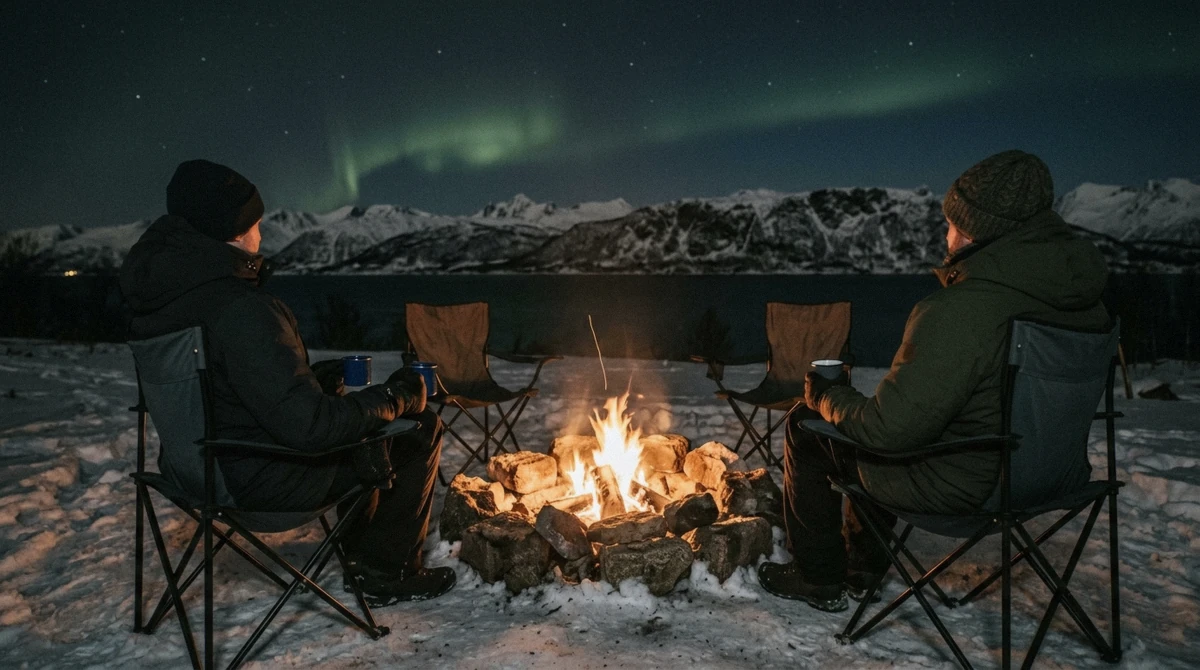
How Long to Stay, by Traveller
If on a tight schedule with only one or two nights available
book the first evening you land and keep the second as your real chase; accept the odds are closer to a coin flip than a guarantee, and treat any sighting on night one as a bonus rather than the plan.
If want a realistic shot without overplanning
book three to four nights with two chases on separate evenings, our standing recommendation, and fill the days between with one full daytime activity.
If traveling on fixed, non-negotiable dates in a bad-weather stretch
add a fifth night if your schedule allows it, since a stuck Atlantic front can span several days running and no amount of driving fixes a region-wide front.
If combining the trip with whale watching, dog sledding or Fjellheisen
plan for four nights minimum so the daytime activities don't compete with your best chase evenings, and schedule the full-day whale trip on a day without a booked chase that evening.
If traveling in December or over the New Year
book chases as early as possible; the 15-seat minibuses with the best sighting rates fill first in the tightest weeks of the season, sometimes weeks in advance.
Frequently Asked Questions
How long should you stay in Tromsø to see the northern lights?
Three to four nights, with two aurora chases booked on separate evenings. That gives you a genuine backup if the first night clouds out, plus daytime hours worth using, and it's the plan both Agnieszka's and Melinda's real trips ended up validating.
How many days in Tromsø is enough for a real chance?
Two nights is the practical minimum for a real shot rather than a single roll of the dice. Three to four nights adds a spare evening and room for daytime activities, and five or more only makes sense if your dates are fixed and you can't risk a run of bad weather.
What month is best for the northern lights in Tromsø?
The season runs late September to early April, peaking November through February. See our best time to see the northern lights guide for the full month-by-month breakdown, since the best month and the best number of nights are two separate questions worth answering together.
Is Tromsø a very expensive place to visit?
We don't track hotel and restaurant prices here, but the aurora side of the budget is concrete: chases run $60.89 to $159.31 per person, and a rental car for the DIY route runs roughly NOK 700 to 1,200 a day plus fuel. Booking two chases instead of one longer tour also tends to cost less overall than it sounds, since prices don't scale much with tour length.
Should you book more than one aurora tour?
Yes. Two chases on separate evenings, ideally with different operators, give you two independent looks at the sky rather than betting everything on one night, and free cancellation up to 24 hours before departure means holding both costs nothing extra.
What can you do in Tromsø during the day?
Whale watching runs November through January, the Fjellheisen cable car climbs to Storsteinen for NOK 495 return, and dog sledding and reindeer camps both run as full daytime experiences that don't touch your evening chase plans.
Does booking an unlimited or rebate ticket change how many nights you need?
It changes what a missed night costs you, not how many nights you should plan. An unlimited-distance ticket or a discount on a repeat trip only pays off if you have another evening free to use it on, so the underlying advice, book more than one night, stays the same either way.
Three to four nights, two chases on separate evenings, is the plan that turns a hopeful trip into a realistic one. It costs less than it sounds, since a second chase runs the same $60.89 to $159.31 as the first, and it gives the days between chases somewhere real to go, whether that's a whale-watching boat, the Fjellheisen viewpoint, or a reindeer camp. It's also the plan that both worked and failed for real travellers whose trips we've followed: Agnieszka's second night delivered after her first came up empty, and Melinda's third night did the same after two misses, while Marcel's week-long cloud cover is the honest reminder that no plan beats a genuinely bad stretch of weather, only shortens the odds against it.
Build in one spare evening if your dates allow it, and let the operators, not the calendar, make the call on where to point the minibus each night.